14 Small Living Room Storage Ideas for Renters (Zero Drilling)
 Save
Small rental living rooms have one brutal rule: every square foot has to do two jobs. Your living room is the lounge, the office, the dining room, and the place where guests judge your life choices. And you can’t drill a single hole to make it work.
I’ve spent years figuring out how to squeeze real storage out of small rented living rooms without losing the deposit. These 14 ideas all share three traits: zero drilling, zero permanent changes, and they actually look good — because storage that looks like a dorm room isn’t storage, it’s clutter with extra steps.
Why Small Living Rooms Are Hard (And What Actually Fixes Them)
Most storage advice assumes you own the walls. Renters don’t. So the fix isn’t “more shelves” — it’s furniture that stores, vertical space that doesn’t need screws, and zones that keep one room from feeling like four rooms colliding.
The golden rule: if it doesn’t hold something, it needs to earn its floor space another way. A coffee table that stores blankets beats a pretty one that doesn’t. A side table with a drawer beats a pedestal. Every piece pulls double duty or it doesn’t come home.
1. A Storage Ottoman as Your Coffee Table
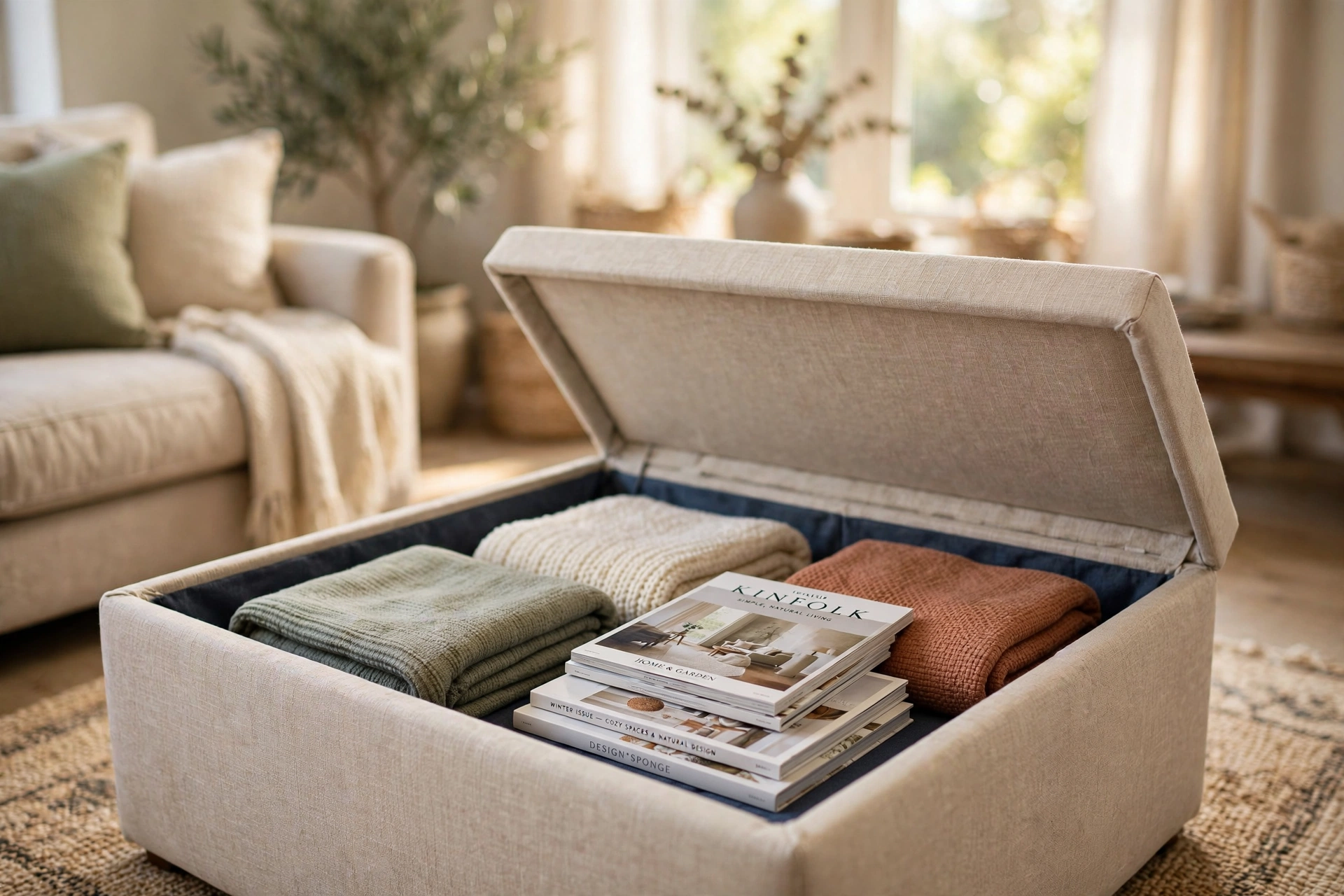
Swap the coffee table for a large storage ottoman and you just gained a hidden closet in the middle of your room. Blankets, board games, the remote graveyard — all inside, all invisible.
Get one with a firm, flat lid so it doubles as a footrest or extra seat when friends come over. Tufted tops look plush but wobble under a tray; flat lids hold drinks. Around $60 to $120 for a good one, and it’s the highest-impact single purchase on this list.
Sizing: for a standard 3-seater sofa, a 36 to 40-inch ottoman keeps proportions right. Too small looks lost; too big eats legroom.
2. A Leaning Ladder Shelf
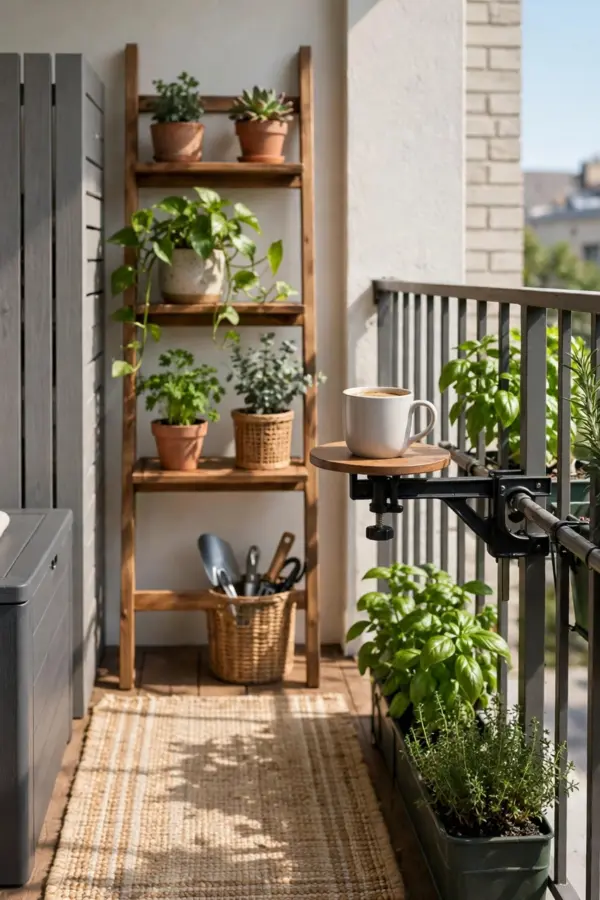
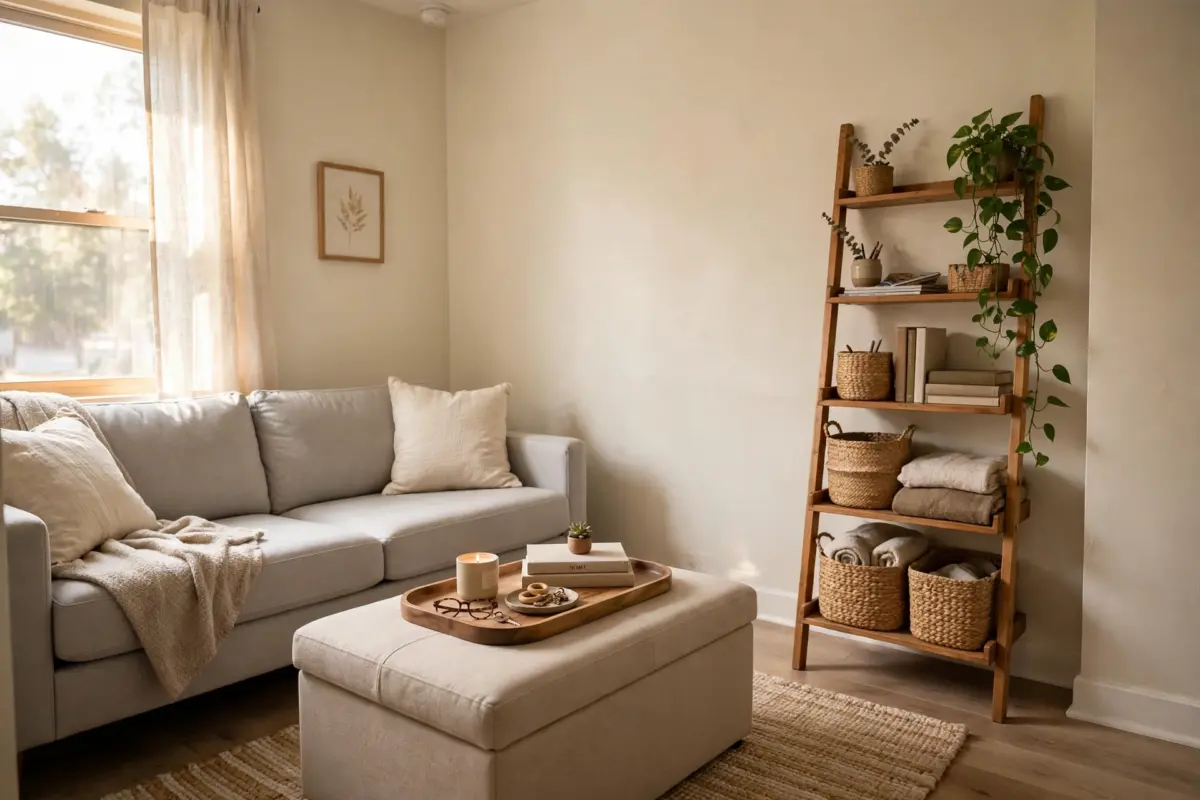
Ladder shelves lean against the wall — no mounting, no screws, gravity does the work. Five tiers of display-and-store space in about 2 square feet of floor. Books on the bottom (heavy, stable), plants and frames up top.
Anchor the top with a removable adhesive strip if you have kids or earthquakes. It won’t hold like a screw, but it stops the slow slide. These run $40 to $80 and every furniture store on earth sells one.

3. Behind-the-Sofa Console Table
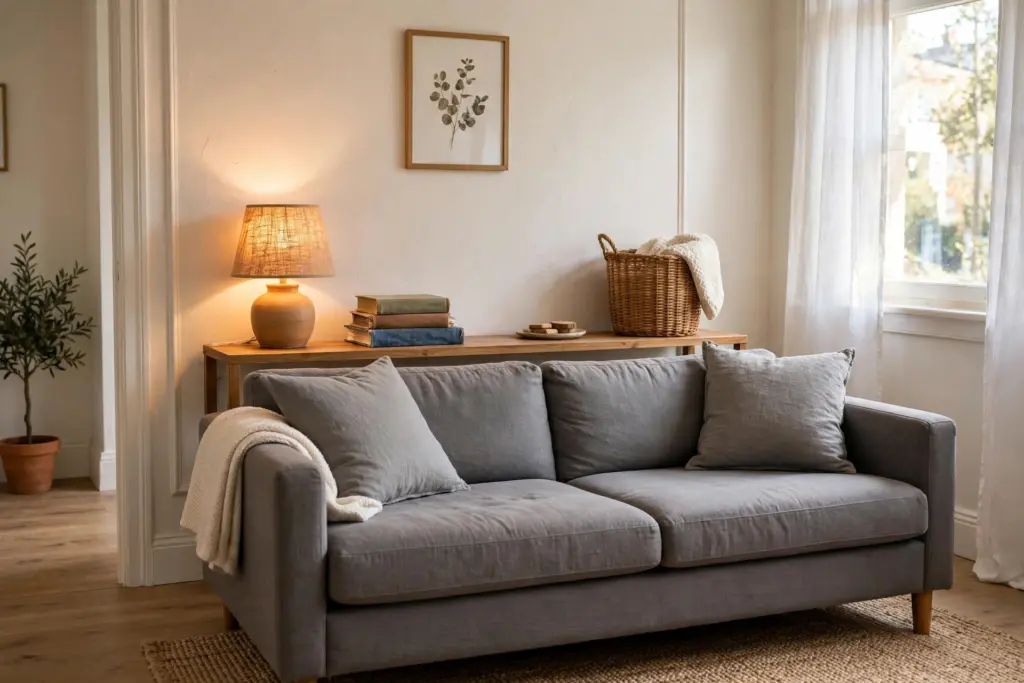
The 6 to 10 inches of dead space behind your sofa is a storage goldmine. A narrow console table there holds baskets for chargers, remotes, and the mail pile that otherwise lives on the sofa arm.
If your sofa floats in the middle of the room (common in studios), this also creates a visual “wall” that separates living zone from sleeping zone. Two jobs, one table.
4. Floating Shelves With Adhesive Brackets (Yes, Really)
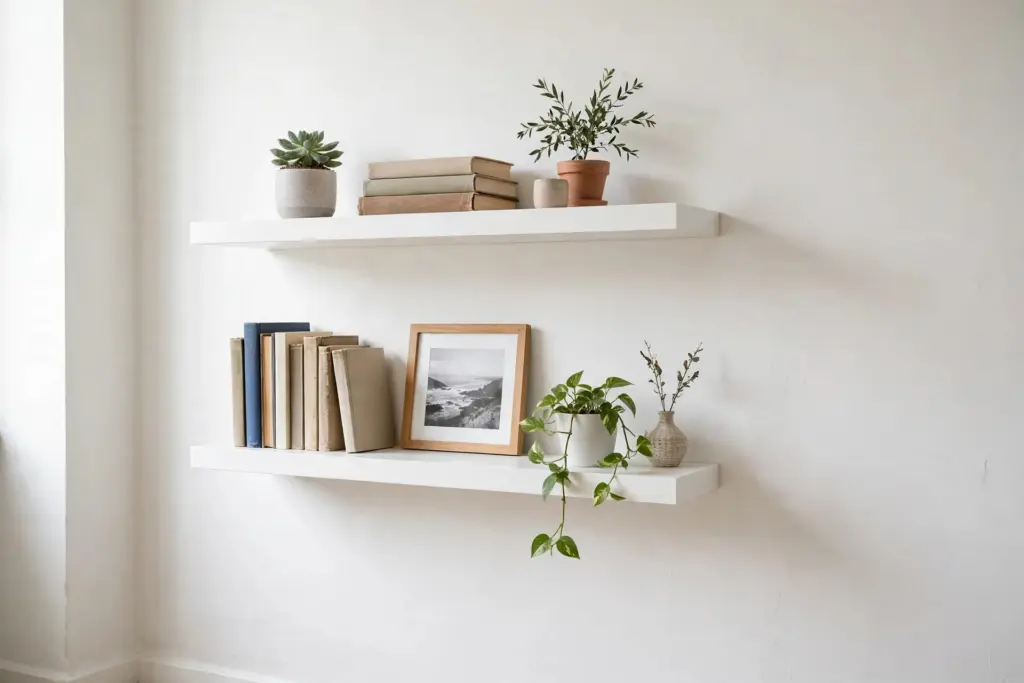
“Floating shelves need drilling” — not anymore. Heavy-duty adhesive shelf brackets now hold 10 to 15 pounds per pair on smooth walls. That’s real books, real plants, real storage.
The catch: they need 24 hours to cure before you load them, and they hate textured walls. Test one bracket with weight before you commit to a whole wall. When you move, dental floss + a hair dryer on low heat removes them cleanly. Mostly. Budget $15 to $25 per shelf all-in.
5. A Bar Cart That Isn’t for Bars
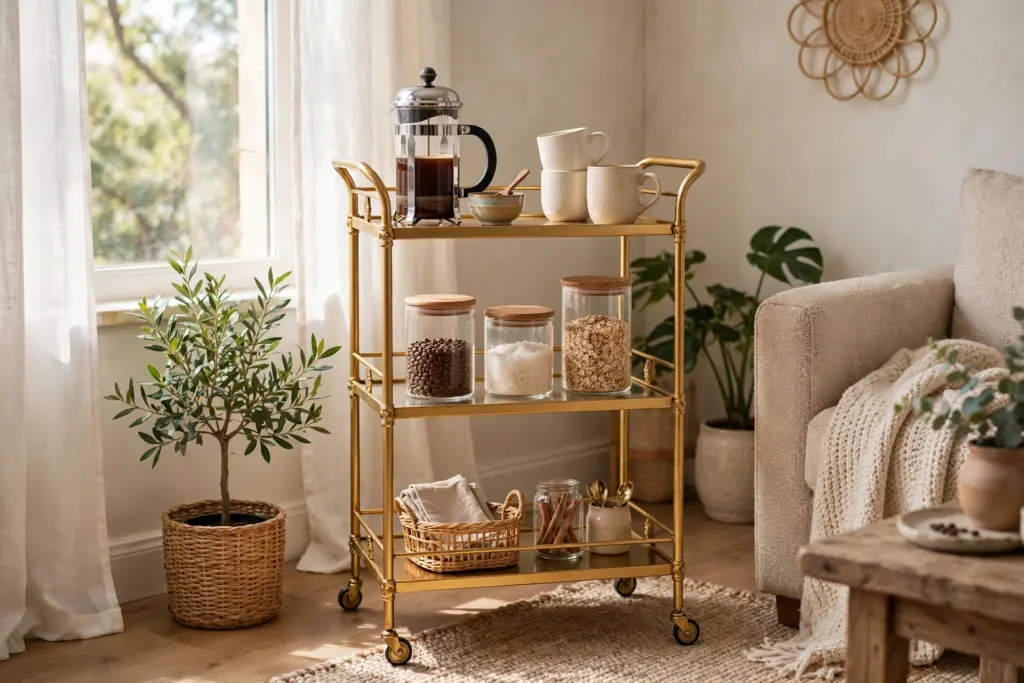
Bar carts are renter storage in disguise: three tiers, wheels, and they look intentional. Use one as a side table, a plant stand, a craft station, or the world’s most mobile charging station.
The wheels are the secret feature. Roll it to the wall when guests come, roll it out when you need it. $35 to $70, and it works in literally every room when the living room doesn’t need it anymore.
6. Storage Cubes as a Room Divider
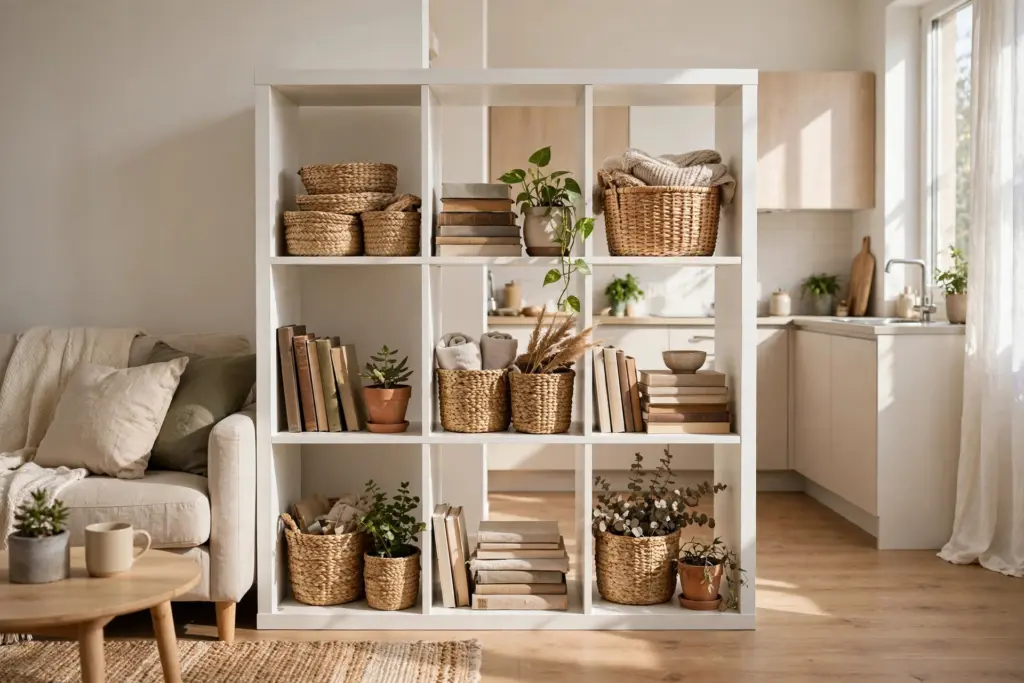
In a studio, a 2×4 cube shelf turned sideways divides “bedroom” from “living room” while storing both sides’ stuff. Baskets on the living-room side, folded clothes on the bedroom side.
This is the single best studio-apartment trick I know. It creates a wall where the landlord didn’t build one, and every cube is storage. A 2×4 unit is about $60 to $90; fabric bins $5 to $8 each.
Stability note: freestanding cube shelves over 3 feet tall want an anti-tip strap. Removable adhesive anti-tip kits exist — use one, especially in earthquake zones or with climbers (toddlers, cats).
7. The TV Wall Without the TV Mount
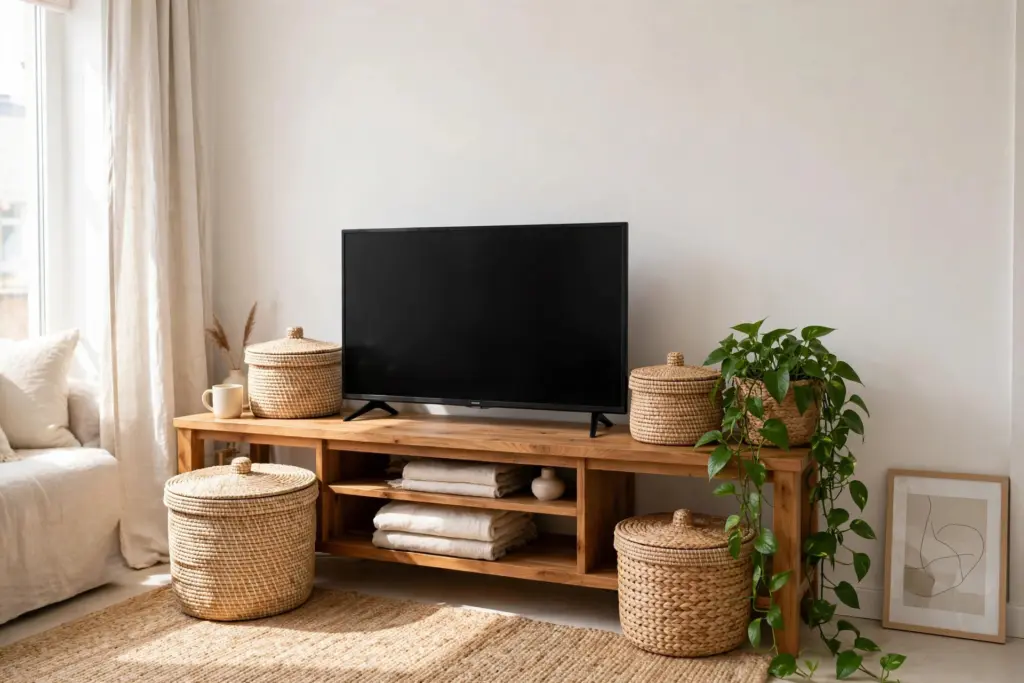
Can’t mount the TV? A low media console with closed cabinets hides the router, the game controllers, and the cable nest. Add adhesive cable clips ($6) up the back to route cords invisibly.
The closed-cabinet part matters. Open TV stands become gadget graveyards. Doors hide the chaos and the dust. If you already own an open stand, fabric bins in the cubbies do the same job for $20.
8. Over-the-Arm Sofa Organizer
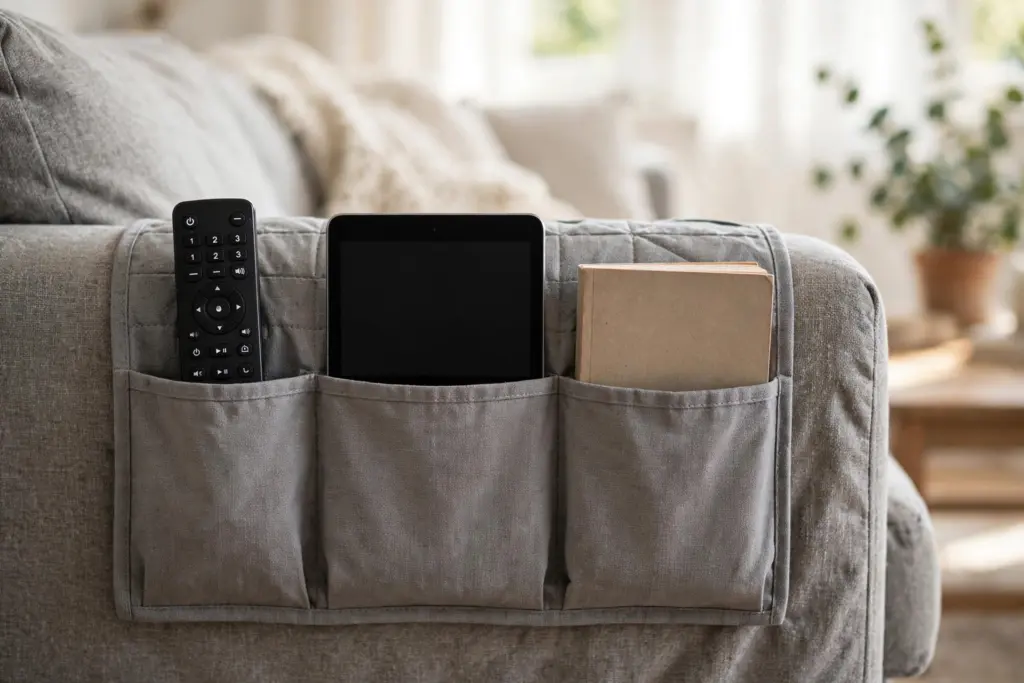
For the remotes, glasses, and phone that otherwise colonize the coffee table: a sofa-arm organizer caddy. It drapes over the armrest — pockets on both sides, zero installation.
This is a $12 fix for the “where’s the remote” problem. Get the structured kind that holds its shape, not the floppy fabric ones that slide into the cushions.
9. A Lift-Top Coffee Table (If You Keep the Table)
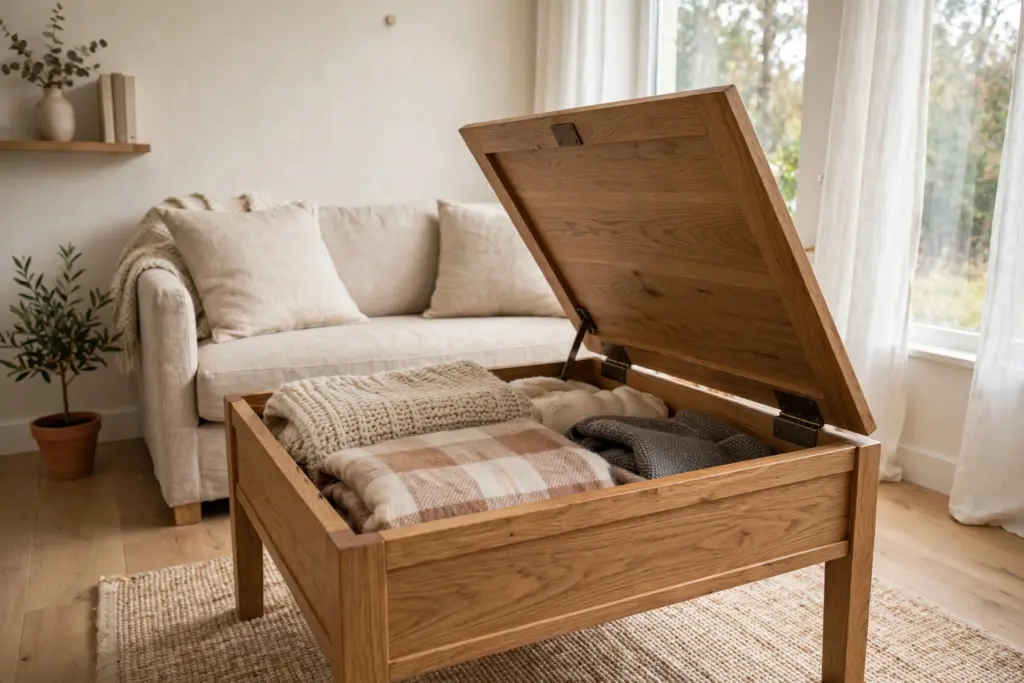
If you can’t part with a real coffee table, make it a lift-top. The top rises to laptop height for work-from-sofa days, and the cavity underneath swallows laptops, notebooks, and chargers.
It’s the work-from-home renter’s best friend. No desk, no problem — dinner table by night, desk by day, storage always. $90 to $150, and worth every penny if your living room is also your office.
10. Window Sill + Sill-Length Shelf
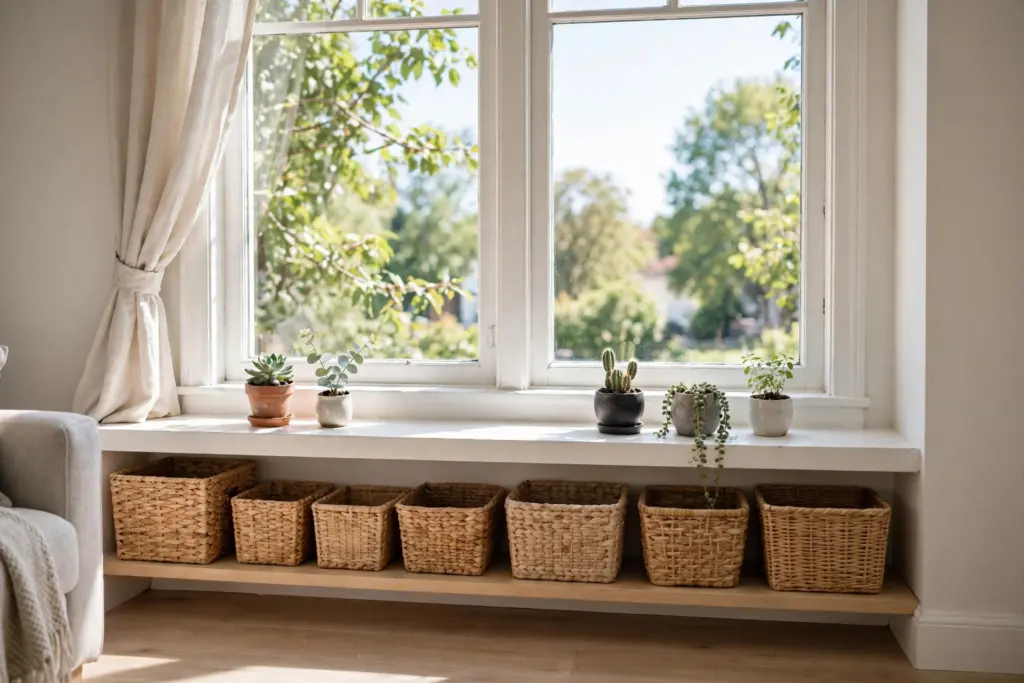
The windowsill is free real estate. A narrow sill-length board (adhesive brackets again) across a wide window creates a plant ledge, a book display, or extra surface without touching the floor plan.
Plants here get the best light in the apartment, which means they actually survive. And a row of green in front of a window makes a small room feel bigger — it’s basically a living curtain.
11. Nesting Side Tables
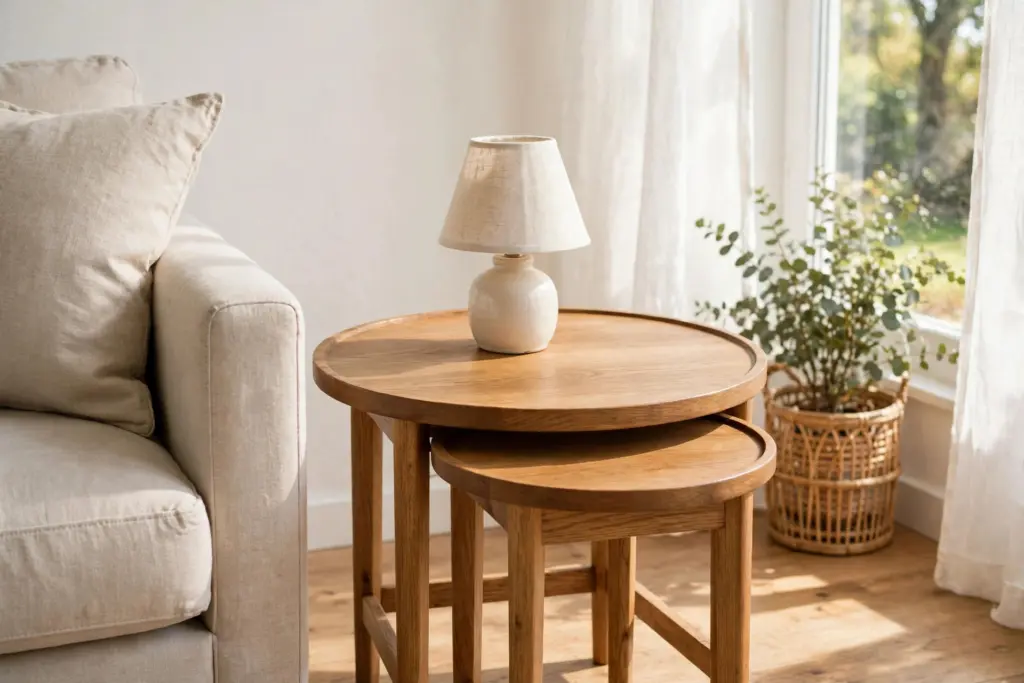
Two tables for the floor space of one. Nesting tables tuck together when it’s just you and fan out when guests arrive — extra surface exactly when you need it, gone when you don’t.
Use the smaller one as a plant stand or book stack in the corner. When it nests, it disappears. $30 to $60 for a set, and they solve the “no surface near the armchair” problem permanently.
12. A Storage Bench Under the Window
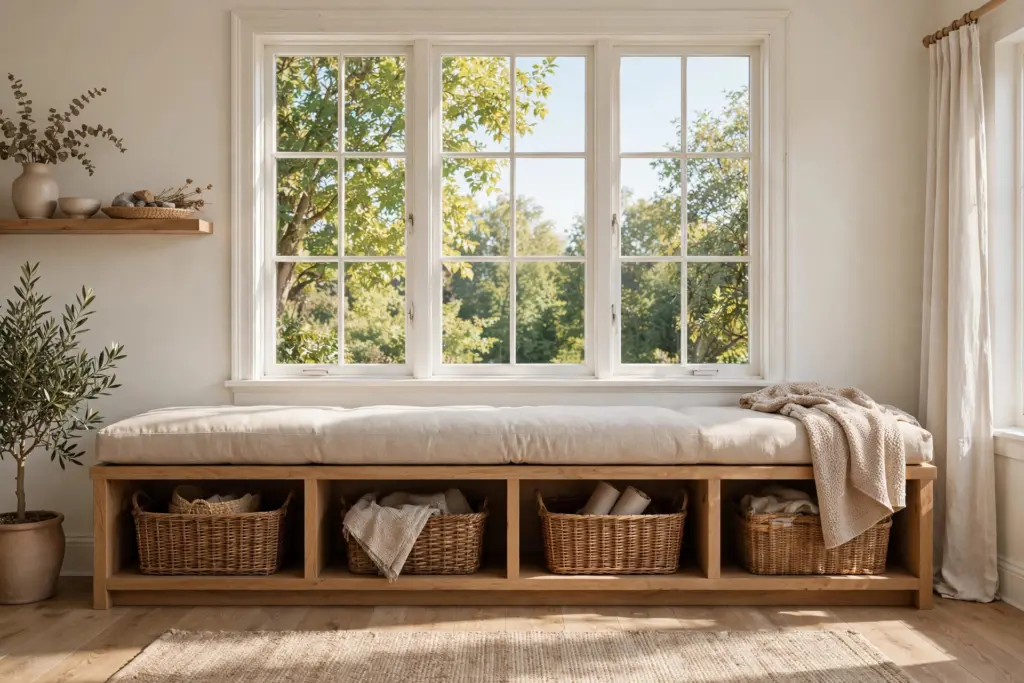
A low storage bench under the window is seating, storage, and a window seat in one. Blankets and off-season stuff inside, a cushion on top, and suddenly the dead space under the window is the best seat in the house.
Measure the window height first — you want the bench top at or below the sill. Standard is 18 inches high; go lower for a lounge feel.
13. Vertical Magazine + Tablet Wall File
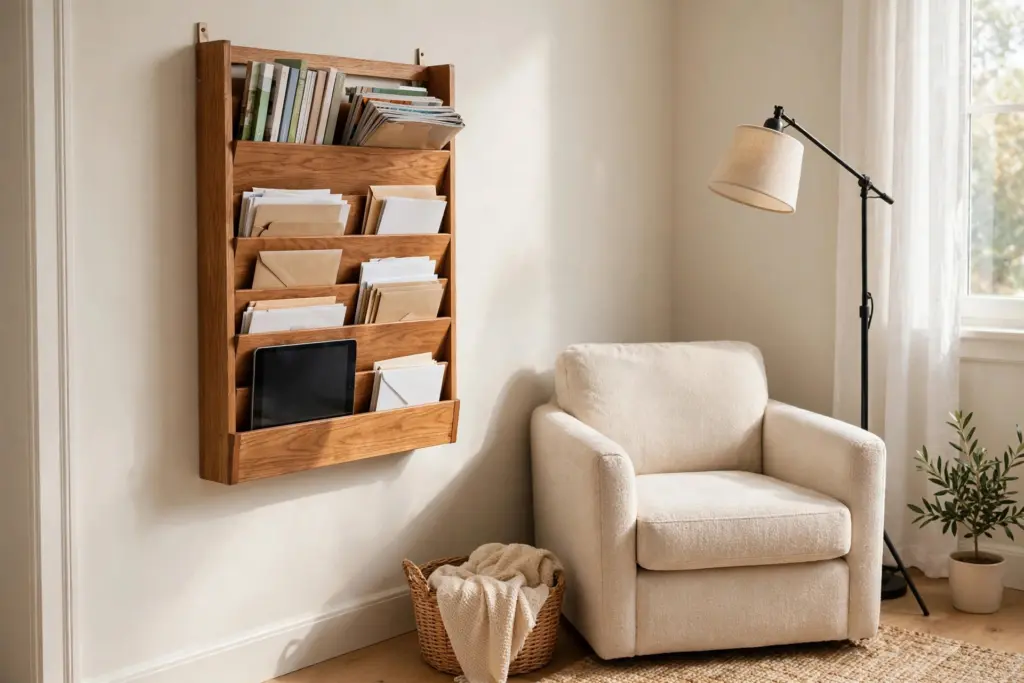
Mail, tablets, notebooks, the kids’ artwork — paper chaos lives on flat surfaces. A wall-mounted file holder (adhesive, 5-minute install) gets it vertical and visible.
Sort once a week: recycle, file, act. The holder just buys you the buffer between “mail arrives” and “I deal with it.” Without it, the buffer is the dining table.
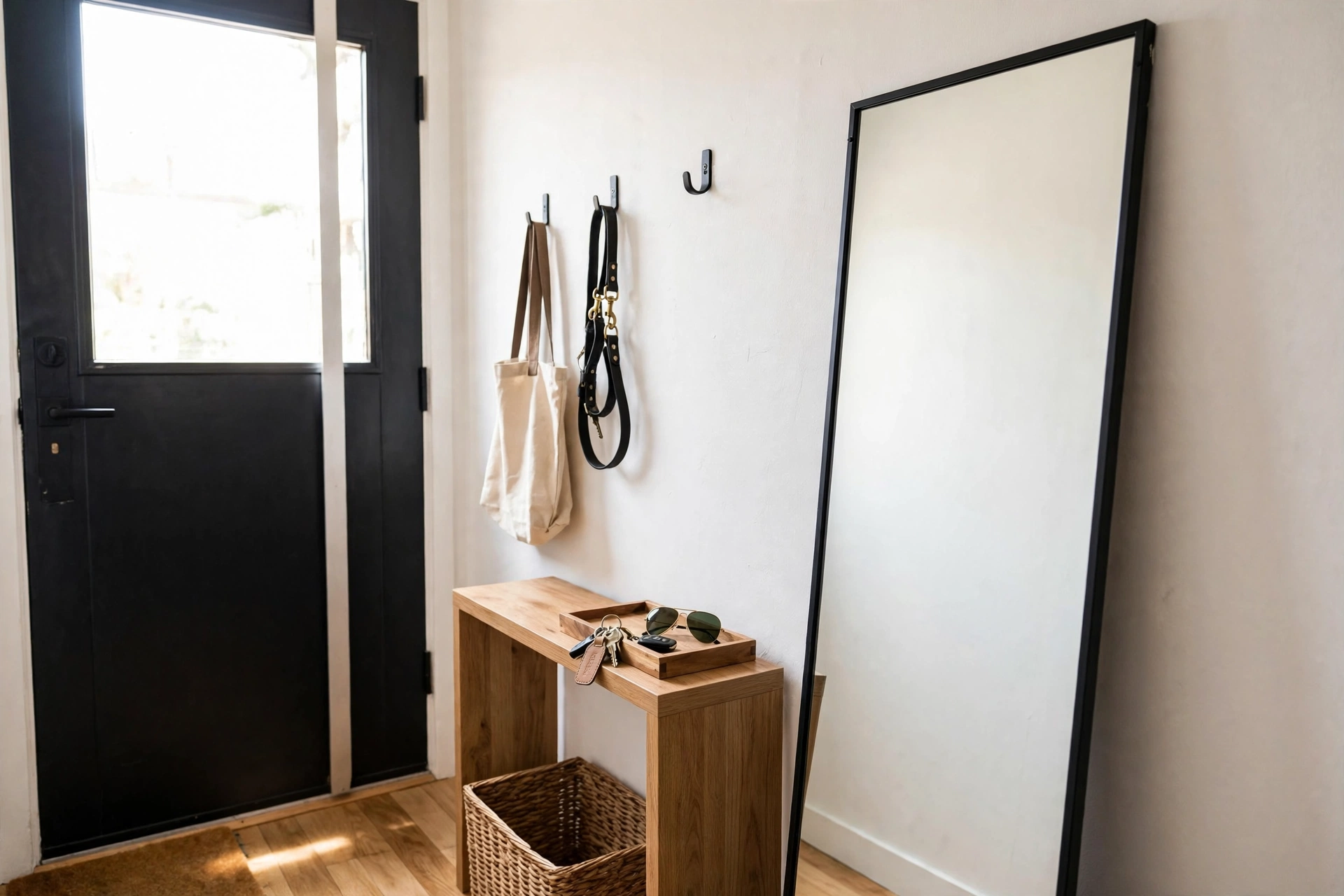
14. The “Landing Strip” by the Door
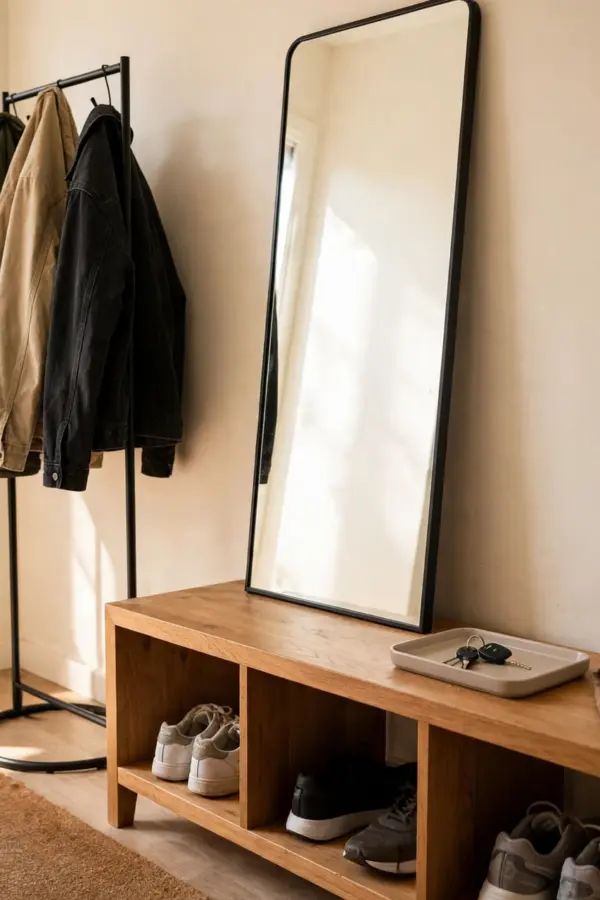
Every living room needs a 2-foot landing strip near the entrance: a tray for keys, a hook strip for bags (adhesive), and a small bin for shoes. Without it, keys live in the sofa and bags live on the floor.
Adhesive hook strips hold 3 to 5 pounds per hook — enough for bags and jackets, not for a loaded backpack. This tiny zone prevents the slow creep of entryway clutter into the living space.
The $100–$175 Starter Kit
If you’re starting from zero, buy in this order:
- Storage ottoman ($60–$120) — biggest single win
- Sofa-arm organizer ($12) — kills remote chaos today
- Adhesive hook strip ($10) — landing strip + extras
- 2–3 fabric bins ($15–$25) — for whatever cube shelf or console you own
Total: roughly $100 to $175. The ladder shelf ($40–$80) is the next buy when budget allows.
5 Mistakes That Make Small Living Rooms Feel Smaller
Pushing all furniture against the walls. It feels logical but creates a dead middle. Floating the sofa even 6 inches off the wall with a console behind it adds storage and makes the room feel intentional.
One overhead light. A single ceiling light flattens a small room. Two or three light sources (floor lamp, table lamp, string lights) create depth. None of them need wiring.
Storage that looks like storage. Clear plastic bins in the living room read as “I’m moving.” Fabric bins, baskets, and closed cabinets read as furniture. The living room is the one room where storage has to be beautiful.
No zones in a studio. Without visual separation, a studio feels like one messy room instead of three small organized ones. A cube shelf, a rug, or even a curtain on a tension rod creates zones.
Buying before measuring. Tape out furniture footprints on the floor before you buy. A 40-inch ottoman in a 10-foot room is perfect; in an 8-foot room it’s a wall.
The One-Hour Weekend Setup
Don’t try to do all 14 ideas in one day. Here’s the first-hour order that gives maximum visible change: (1) set up the landing strip by the door (10 min) — keys, hooks, tray; (2) swap in the storage ottoman and load it with blankets and remotes (15 min); (3) put the sofa-arm organizer on (2 min); (4) stick up adhesive hooks where bags live (10 min); (5) do a 20-minute sweep — everything without a home goes into one bin, sorted later. One hour, and the room already feels different. The rest happens over the following weekends.
Plan It on Paper First (10 Minutes)
Tape-measure the room, sketch it on paper (or a free room-planner app), and cut paper rectangles to scale for each piece of furniture you’re considering. Move the paper around before you move — or buy — anything. Ten minutes with paper saves a weekend of hauling a too-big ottoman back to the store. Mark door swings, outlet positions, and the path from door to sofa: if furniture blocks the natural walkway, the layout is wrong no matter how good it looks.
Layouts for 3 Common Living Room Shapes
The long rectangle: float the sofa across the middle instead of pushing it against the far wall — it splits the room into a living zone and an office/dining zone. Console table behind the sofa, cube shelf as the divider if it’s also a studio.
The square box: anchor one corner as the media zone (TV console + sofa at a right angle), keep the opposite corner open for the ladder shelf and a reading chair. Square rooms punish centered furniture — push zones into corners and keep the middle breathable.
The studio L: the L-shape is a gift. The short arm becomes the “bedroom” side of a cube-shelf divider, the long arm stays living room. One divider, two rooms, zero construction.
FAQ
How can I add storage to a small living room without drilling?
Use furniture that stores (ottomans, lift-top tables, benches), leaning shelves, adhesive-mounted hooks and brackets, and freestanding dividers. Every idea in this post is drill-free and deposit-safe.
What’s the best furniture for a small living room with no storage?
A storage ottoman (as coffee table) and a cube shelf (as divider/storage) give the most cubic feet per dollar. Both serve double duty as furniture, so they don’t cost floor space.
How do I make a studio apartment living area feel separate?
A sideways cube shelf, a rug that defines the zone, or a curtain on a tension rod creates visual separation without walls or drilling.
Where do I put things when there’s no closet near the living room?
Closed cabinets, ottomans, and lidded baskets become your closets. Group by zone: media stuff near the TV, blankets near the sofa, work stuff near the lift-top table.
How much does it cost to add storage to a rental living room?
$100 to $175 covers the starter kit (ottoman, organizer, hooks, bins). A full makeover with ladder shelf and cube unit runs $200 to $350.
Will adhesive shelves and hooks damage rental walls?
Heavy-duty removable adhesive holds well on smooth, clean walls and removes cleanly with a hair dryer on low heat and dental floss on most paint. Test in a hidden spot first — cheap flat paint can peel. They struggle on textured walls.
How do I arrange furniture in a very small living room?
Float, don’t hug the walls: pull the sofa 6 inches off the wall for a console behind it, define zones with rugs, and keep the walkway from door to sofa clear. Sketch it on paper first — 10 minutes saves a weekend of hauling furniture.
What’s the best storage for a living room that’s also a home office?
A lift-top coffee table (desk by day, table by night) plus a rolling cart for work supplies that rolls away after hours. Keep work stuff in one lidded bin so the “office” disappears when the laptop closes.
Small rental living rooms aren’t a storage problem — they’re a systems problem. Start with the ottoman, add the landing strip, and build from there. Every piece earns its floor space or it doesn’t come home.
Loved this? Pin it so you can find it later.
Pin this post
Zoya Siddiqui
Hi, I'm Zoya Siddiqui, the founder of Shutki. I live in small rental spaces and share practical, renter-friendly storage ideas for tiny kitchens, bedrooms, closets, and bathrooms — no drilling, no renovations, no lost security deposit.
All posts